
Welcome to Chobe National Park — The Kingdom of Giants
If you’ve ever dreamed of watching elephants cross a river at sunset or spotting lions in the wild, Chobe National Park belongs at the top of your list. Located in northern Botswana, this iconic park offers diverse landscapes, rich wildlife, and safari experiences you’ll never forget.
Chobe National Park isn’t just a place; it’s a wild orchestra of trumpeting elephants, grunting hippos, and the hum of adventure that never stops. Located in northern Botswana near the borders of Namibia, Zambia, and Zimbabwe, it’s one of the most accessible safari destinations in Africa — perfect for travelers planning a cross-border journey.
If you’re already imagining yourself floating on the Chobe River with a camera in one hand and a cold drink in the other, hold that thought — but first, apply for your Botswana eVisa. Trust us, it’s the easiest step of your safari planning and saves you the headache of long queues when you arrive.
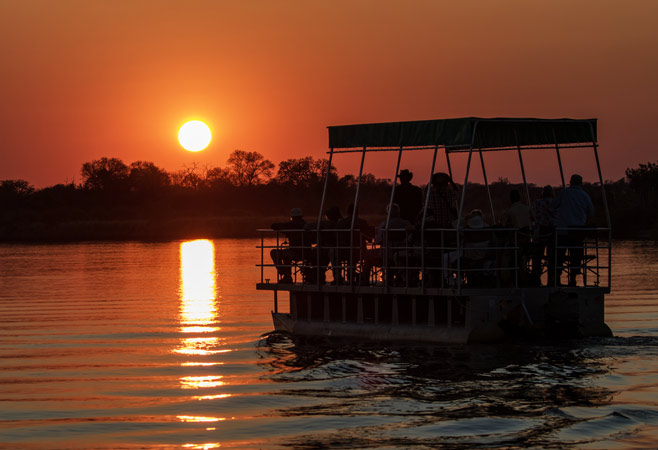 Sunset Safari on the Chobe River, Botswana
A Landscape Painted by Nature
Chobe National Park covers approximately 11,700 square kilometers, making it one of Botswana’s largest national parks. It’s a place of contrasts — lush riverfronts that sparkle in the sun, dusty plains where predators lurk, and serene wetlands where time seems to slow down.
The park is divided into distinct regions:
- The Chobe Riverfront (Serondela) — the most popular area, where you’ll find herds of elephants gathering for their daily dip.
- Savuti Marsh — famous for its lions and dramatic predator-prey scenes.
- Linyanti Marshes — remote, quiet, and rich in birdlife.
- Nogatsaa and Tchinga — perfect for those who want to escape the crowds and feel like real explorers.
Chobe is part of the Kavango–Zambezi region, which supports one of the largest elephant populations in the world, with tens of thousands of elephants regularly moving through the park.
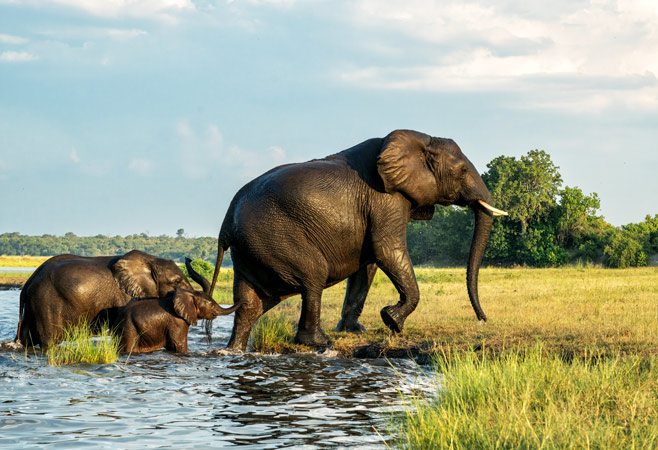 Elephant Herds Crossing the Chobe River
A Roaming History and Conservation Spirit
Long before it became Botswana’s first national park, the land of Chobe was home to the San people — skilled hunters and gatherers who lived in harmony with nature. Chobe National Park was officially established in 1968, and since then, it’s been a conservation success story.
However, success brings its own challenges. The park’s elephant population has grown so large that it now plays a complex role in shaping the landscape. Conservationists are constantly working to balance wildlife protection with habitat preservation — a delicate dance, but one that keeps Chobe thriving.
So, when you visit (after getting your eVisa, of course), you’re not just enjoying a safari — you’re supporting one of Africa’s most important conservation efforts.
Wildlife: Where Every Day Is a Documentary
You know those nature documentaries where the camera zooms in on a lion chasing a buffalo at sunset? That’s Chobe National Park — except you’re not watching from a couch; you’re right there in the dust, heart pounding, whispering “please let me get this shot!”
Here, elephants are the stars, but they share the spotlight with buffaloes, hippos, giraffes, zebras, leopards, and a bird list so long it could fill a novel. Over 450 bird species call Chobe home — from the majestic African fish eagle to the vibrant carmine bee-eater.
Want to see a crocodile sunbathing next to a yawning hippo? Done. How about a herd of elephants crossing the river like synchronized swimmers? Chobe delivers.
And if that doesn’t convince you, maybe this will: boat safaris here are unlike anywhere else in Africa. You drift quietly down the river as wildlife parades along the banks — a safari from the comfort of a floating armchair. Just remember to wave at the hippos (from a respectful distance).
The Best Time to Visit Chobe National Park
The best time to visit depends on what kind of traveler you are.
Dry Season (May to October): Peak safari time. Animals gather around the river, making them easy to spot. The weather is cooler, and the skies are crystal clear.
Wet Season (November to April): The park bursts into green, baby animals are born, and birdwatchers rejoice. You might get a bit muddy — but hey, that’s part of the adventure!
No matter when you go, applying for your eVisa early means more time for packing (and less time stressing).
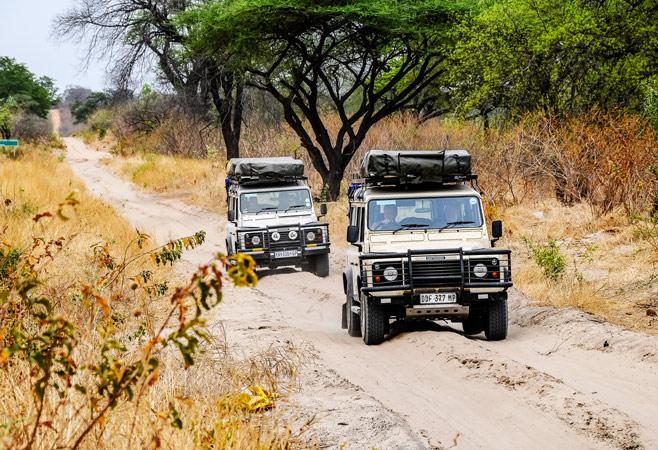 Game Drive in Chobe National Park
Safari Adventures to Remember
There are countless ways to explore Chobe National Park:
- Game Drives: Morning and afternoon drives bring you up close to wildlife action. Keep your camera ready — you never know what’s around the next bend.
- Boat Cruises: Float down the Chobe River at sunset, when the light turns golden and the animals seem to pose for photos.
- Bird Watching: With hundreds of species fluttering around, it’s a paradise for bird lovers.
- Photography Safaris: Many lodges offer guided photo tours to help you capture that perfect shot.
And if you’re planning to hop over to Victoria Falls is about 1–1.5 hours away from Kasane by road, depending on border formalities, your eVisa can make border crossings smoother. It’s the little things that make travel stress-free — and you deserve a safari with zero fuss.
Where to Stay in Chobe
Accommodation options range from luxury river lodges to cozy campsites. You can fall asleep to the sounds of lions roaring in the distance or hippos grunting nearby — it’s Africa’s lullaby.
For those seeking ultimate comfort, lodges along the Chobe Riverfront offer stunning views and private decks. If you prefer something rustic, there are self-drive and camping options that bring you closer to nature (and maybe a curious elephant or two).
Whichever you choose, make sure your eVisa confirmation email is handy — it’s your golden ticket to adventure.
Travel Tips for a Smooth Safari
- Apply for your eVisa early. It’s quick, affordable, and available online.
- Pack smart: Bring light clothing, a hat, sunscreen, and binoculars.
- Stay hydrated: It’s easy to get caught up in the excitement and forget water.
- Respect wildlife: Keep a safe distance and let animals do their thing — no selfies with lions!
- Support local guides and communities: They make your safari experience richer and help preserve the park.
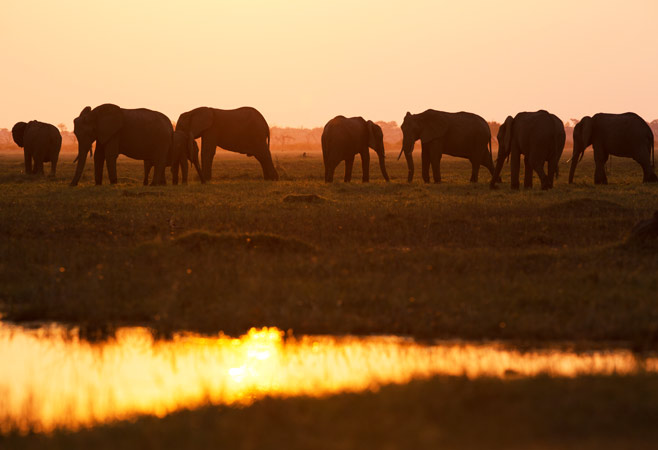 Savuti Marsh Sunset, Chobe National Park
Why Chobe National Park Should Be on Your Bucket List
Few places on Earth capture the essence of Africa quite like Chobe National Park. It’s raw, beautiful, unpredictable — a place where elephants stroll across the horizon, and every sunrise feels like a fresh invitation to explore.
Whether you’re a first-time traveler or a seasoned safari-goer, Chobe has something magical waiting for you. So pack your sense of wonder, grab your camera, and get that eVisa — your wildest adventure is only a click away.
And remember: if you think you’ve seen it all, wait until an elephant blocks your path. In Chobe, that’s just nature’s way of saying, “Welcome to the neighborhood.”
Related Articles
- India to Zambia Distance: Flight Time, Routes & Travel Guide
- Gambia to Zambia Distance: Flight Time and Travel Options
- Transit Visa Zambia: Requirements, Eligibility, Fees & How to Apply
- Zambia Business Visa: Eligibility, Fees & Process
- Kenya to Zambia Distance: Complete Travel Guide
- Rwanda to Zambia Distance: Flight, Road & Travel Guide
- Distance Between Zambia and South Africa: Travel Guide
- Top Zambia Tour Packages from India with Safari
- Ghana to Zambia Distance: Complete Travel Guide
- Discover Mukuni Village Zambia: A Cultural Journey You’ll Never Forget

 NEED HELP 24/7
 United States
  United Kingdom
  Singapore
  Viber
Viber 


